Pet Travel Essentials Checklist for Dog and Cat Road Trips
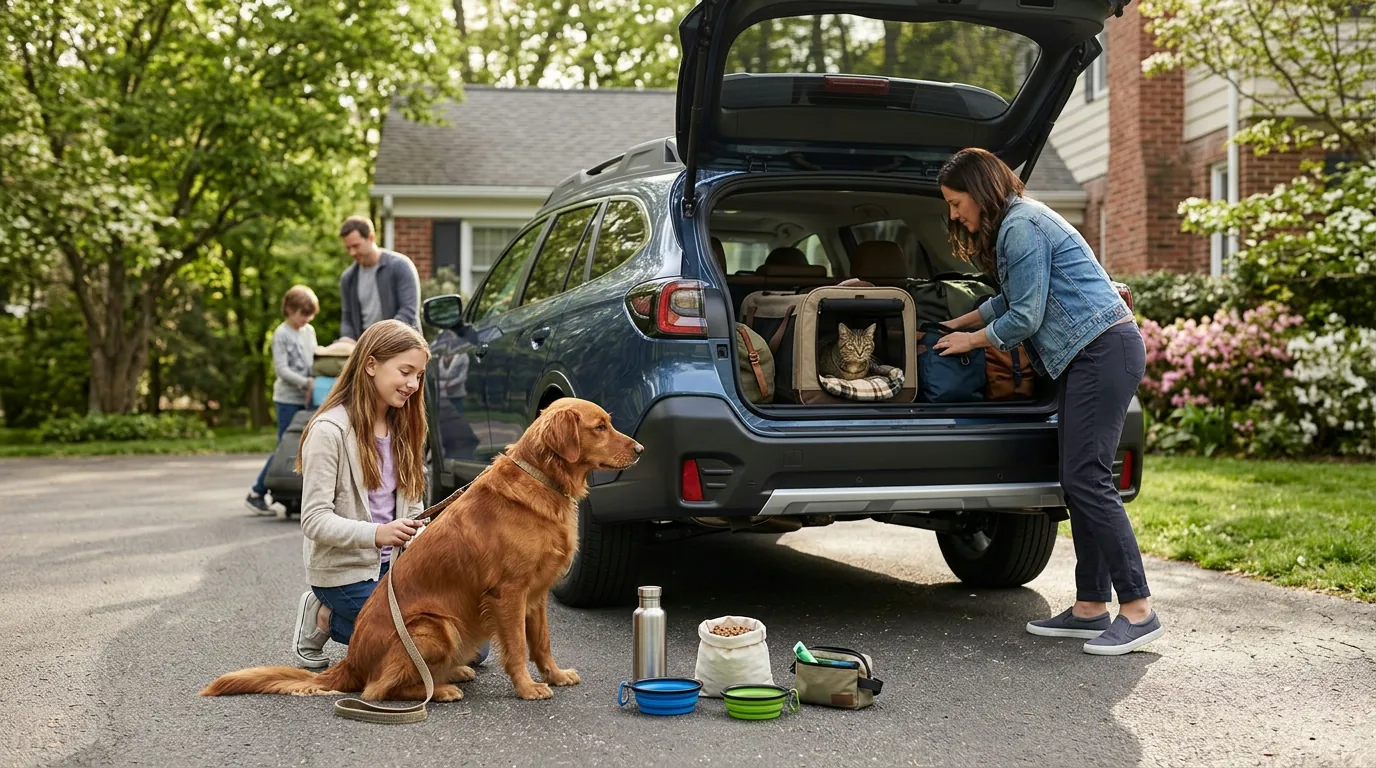
A little preparation can make a road trip with your dog or cat easier to manage. From familiar food to a secure carrier, the right supplies help you stay ready for routine stops and unexpected delays. Our printable Pet Travel Essentials Checklist gives you a simple way to organize your packing before a vacation, while the tips below can help you plan for your pet, your vehicle, and your route. For more guidance, see Bringing Pets and Wildlife into the United States.
Start with the essentials
For both dogs and cats, put food, water, prescribed medications, identification, and a secure way to travel at the top of your list. Pack your pet’s usual food and enough water for the journey, along with portable bowls you can offer at stops. Bring a modest extra supply of food and medication in case traffic, weather, or a change of plans extends the trip. For further reading, see Pet Travel Safety.
Keep important health information where you can reach it without unpacking the whole car. That may include your veterinarian’s contact details, relevant records, and instructions for any prescribed medication. The guide below is a starting point; adapt it to your pet’s needs, destination, and length of stay.
Pet road trip packing guide
| Category | Items to consider | Why they matter |
|---|---|---|
| Food and water | Usual food, drinking water, and portable bowls | Helps maintain familiar routines |
| Health | Prescribed medications, veterinary contact details, and relevant records | Keeps care information accessible |
| Safety | Secure carrier or travel restraint, collar, and identification | Helps keep pets contained and identifiable |
| Comfort and cleanup | Familiar bedding, waste bags or litter supplies, and cleaning materials | Supports rest and handles messes |
Consider packing a small cleanup kit within reach, separate from your main luggage. Paper towels, pet-safe cleaning supplies, and a bag for soiled items can make an unexpected mess easier to handle. For cats, include a portable litter tray and familiar litter.
Prepare your pet and vehicle
Before departure, check that your pet’s identification tag is legible and that the contact information associated with their microchip is current. A recent photo can also be useful if you need help identifying a lost pet. Keep a leash handy for dogs and for any cat accustomed to wearing a properly fitted harness.
A properly secured carrier or suitable travel restraint helps prevent your pet from moving freely around the vehicle and distracting you. Choose equipment appropriate for your pet and vehicle, follow the manufacturer’s instructions, and secure the carrier so it cannot slide during the drive. Never allow a pet to ride in your lap while you drive.
Give your pet time to become comfortable with the carrier or restraint before the trip. Leave the carrier accessible at home, add a familiar blanket, and reward calm exploration. When possible, try a few short practice drives, gradually building up to longer outings. For cats, our Cat Body Language & Behavior Cheat Sheet can be a useful companion as you observe your cat’s signals during preparation.
Talk with your veterinarian about health concerns, travel-related anxiety, and any medication questions before you leave. Your destination may also have vaccination, documentation, or other requirements. The CDC’s pet travel guidance is a useful place to start researching requirements for your route.
Plan stops and overnight stays
Build time into your schedule for regular water, bathroom breaks, and exercise appropriate for your pet. Dogs may benefit from a short walk on a leash at a safe stop. Cats may need a quiet, secure space and access to a litter tray; make sure doors and windows are closed before opening their carrier.
Never leave your pet unattended in a vehicle, even during a quick stop. Temperatures can become dangerous quickly, so plan errands, meals, and breaks around keeping your pet supervised. If you’re traveling with another person, take turns staying with your pet when needed.
Before booking an overnight stay, confirm the accommodation’s current pet policies, including any fees or restrictions. Identify a veterinary clinic near your destination and save its contact information, along with your regular veterinarian’s number. The American Veterinary Medical Association’s travel resources offer additional guidance for planning a trip with an animal.
Use a printable checklist before departure
Our Pet Travel Essentials Checklist is a printable planning aid for dog and cat trips, priced at $3.99. Use it while gathering supplies, then review your packed items once more before you leave. Our team recommends keeping your own trip details in mind: a weekend drive and a longer vacation may call for different quantities and stop plans.
View the product page when you’re ready to plan, and adapt your packing to your pet, route, and length of stay. A final check of medications, identification, water, and travel restraints can help you head out better prepared.
FAQ
What are the must-haves for travel with pets?
Bring your pet’s usual food, water, bowls, prescribed medications, identification, and a secure carrier or suitable restraint. Include cleanup supplies and relevant veterinary contact details and records.
How can I prepare my cat for a road trip?
Help your cat get accustomed to a secure carrier before travel, pack familiar comfort items, and plan for water and litter access. Consult your veterinarian about any travel-related health or anxiety concerns.
Can I leave my pet in the car during a quick stop?
No. Never leave your pet unattended in a vehicle, since temperatures can become dangerous quickly; plan stops so your pet remains supervised.












Leave a comment