Self-Love & Worthiness: A Guided Meditation Course

Self-love does not have to begin with a dramatic change. It can start with a few quiet moments, a supportive phrase, or a willingness to notice how you speak to yourself. Our Meditations for Self-Love & Worthiness audio course offers an approachable way to explore those moments through guided listening.
Whether you have an established mindfulness practice or are simply curious, you can make space for a routine that fits your day. There is no perfect way to begin and no particular outcome you need to achieve.
A Gentler Way to Practice Self-Love
Self-love can mean meeting your thoughts and feelings with care rather than immediately judging them. It does not require you to feel positive all the time or ignore situations that are difficult. Instead, it can be a practice of recognizing what you are experiencing and responding with the same patience you might offer someone you care about.
Our audio course brings together guided meditations, affirmations, and mindfulness with a focus on confidence, calm, and inner healing. A guided practice can be useful when you want a little structure but do not know where to start on your own.
Think of the course as a supportive addition to your self-care, not a treatment or a substitute for professional care. If you are experiencing persistent distress or have concerns about your mental health, a qualified professional can help you find support suited to your needs.
What Each Practice Can Bring to Your Day
Guided meditation gives you a voice to follow as you pause and direct your attention. That structure can be helpful when your mind feels busy or you have trouble deciding what to do with a quiet moment. You do not need to clear your mind; noticing that your attention has wandered and gently returning is part of the practice.
Affirmations offer another way to explore your inner dialogue. A phrase is more useful when it feels believable enough to repeat without pressure. For example, “I am learning to be kinder to myself” may feel more approachable than a statement that clashes with how you feel today.
Mindfulness involves noticing what is happening in the present moment. You might observe a self-critical thought without treating it as a fact or trying to push it away. The National Institutes of Health’s guide to mindfulness offers more context on bringing awareness to everyday experiences.
Ways to Use the Practices
| Practice | Purpose | Simple way to begin |
|---|---|---|
| Guided meditation | Make space for a focused pause | Listen somewhere comfortable with minimal distractions |
| Affirmations | Practice kinder self-talk | Choose a phrase that feels supportive and repeat it gently |
| Mindfulness | Notice the present moment | Bring attention to the breath or physical sensations |
Create a Routine That Feels Supportive
Choose a time when listening feels practical, whether that is before your day gets busy, during a break, or as part of your evening routine. Start with a manageable session rather than setting an ambitious schedule. A few attentive minutes can give you a chance to discover what feels comfortable.
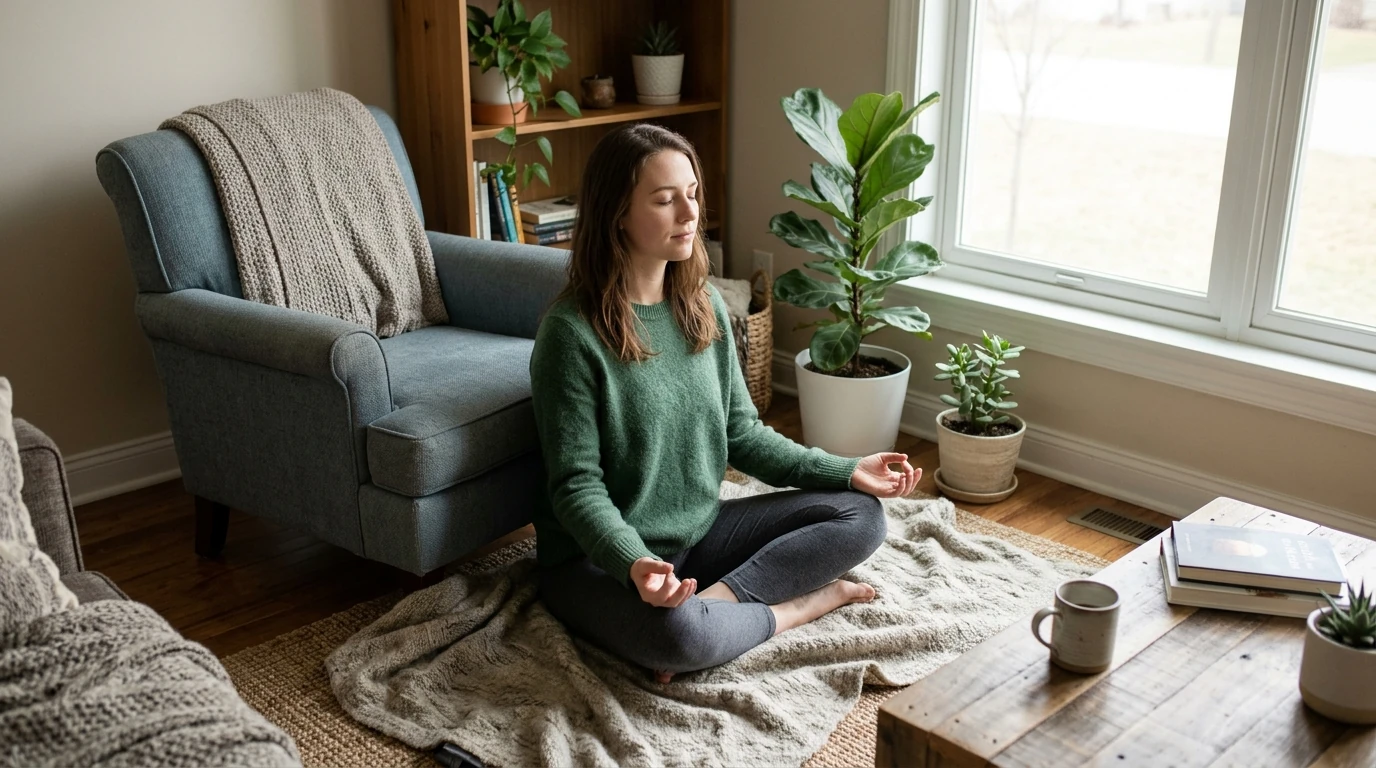
Make your surroundings work for you. You might sit in a favorite chair, lower the volume, or listen with your eyes open. Pause when you need to, and give yourself permission to return another time. If you miss a day, there is no need to make up for it; you can simply begin again when it suits you.
If you want to add an affirmation, try one of these gentle starting points:
- “I can treat myself with kindness.”
- “I am learning to make space for my needs.”
- “I can take this moment one step at a time.”
Choose words that feel supportive to you, or adapt them. You do not have to force yourself to feel a certain way as you say them.
Who May Enjoy This Audio Course
The course may appeal to you if you want a guided way to explore self-compassion or make room for calm and confidence in your day. It can also suit someone who prefers listening to a practice rather than creating one from scratch.
Experiences vary, and meditation can feel uncomfortable for some people. If a session feels unsettling, stop or change the practice: open your eyes, shift your attention to your surroundings, or take a break. The National Center for Complementary and Integrative Health provides information about meditation, mindfulness, and safety.
Our Meditations for Self-Love & Worthiness audio course is in stock for $26.99. Visit the audio course product page if you would like to make it part of your routine.
Pair Your Practice With Broader Self-Care
Mindful listening can sit alongside other everyday forms of care. Rest when you can, find movement you enjoy, and make time for nourishing meals. These habits do not have to be perfect or happen all at once; small choices can help you make room for your needs.
For a broader beginner resource, explore our Whole You holistic wellness guide. This digital ebook covers nutrition, exercise, mental health, and self-care, making it a companion to a listening practice.
FAQ
Does meditation help with self-love?
Meditation may support self-compassion by helping you notice self-critical thoughts and respond more gently. Experiences vary, and meditation is not a substitute for mental health care.
How often should I practice self-love meditation?
Choose a manageable routine that fits your life, whether that means listening regularly or returning when you can. There is no required frequency or guaranteed result.
What if affirmations feel uncomfortable?
Try a gentler phrase that feels believable, such as “I am learning to be kind to myself.” Give yourself time to explore what feels supportive without forcing a positive feeling.











Leave a comment